
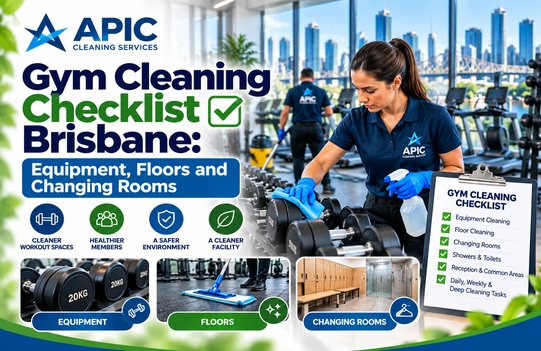
Gyms and fitness centres in Brisbane experience constant foot traffic, frequent equipment use, and perspiration on shared surfaces. Without a consistent cleaning routine, these conditions can lead to unpleasant odours, dirty floors, and unhygienic workout areas.
A structured gym cleaning checklist helps gym owners, fitness centre managers, and facility operators maintain a cleaner environment for members and staff. It also makes it easier to identify cleaning tasks that need to be completed daily, weekly, or periodically.
In this guide, APIC Cleaning explains how to clean gym equipment, floors, changing rooms, showers, toilets, and other high-use areas, with practical tips for Brisbane fitness facilities.
Why Is Regular Gym Cleaning Important?
Regular cleaning is an important part of gym management. Members share weights, exercise machines, mats, benches, bathrooms, and other facilities throughout the day. Sweat, dust, body oils, and moisture can accumulate quickly if cleaning is inconsistent.
A reliable cleaning routine can help gyms:
Maintain cleaner shared equipment and workout spaces.
Reduce the build-up of dirt, sweat, and unpleasant odours.
Keep floors, showers, and changing areas in better condition.
Improve the overall experience for members and visitors.
Protect flooring, upholstery, and equipment from avoidable wear.
Support a professional image for the business.
For facilities requiring broader workplace cleaning, explore APIC Cleaning Services to learn more about the company's cleaning solutions.
Gym Cleaning Checklist: Daily Tasks
Daily cleaning should focus on high-touch surfaces, shared workout equipment, floors, amenities, and areas that receive the most use. Busy gyms may need cleaning more than once a day, depending on membership numbers and operating hours.
1. Clean and Disinfect Gym Equipment
Gym equipment is one of the most frequently touched areas in a fitness centre. Treadmills, exercise bikes, weight machines, dumbbells, barbells, and benches can collect sweat and residue throughout the day.
Daily equipment cleaning checklist:
Wipe down treadmill handles, control panels, and touchscreens using manufacturer-approved products.
Clean exercise bike seats, handlebars, and adjustment controls.
Wipe weight benches, machine seats, pads, and handles.
Clean dumbbells, weight plates, and other shared accessories.
Disinfect high-touch surfaces according to product instructions.
Allow surfaces to remain wet for the disinfectant's specified contact time.
Check equipment for visible residue or damage before returning it to use.
Important: Use cleaning products compatible with each equipment surface. Excess moisture or unsuitable chemicals can damage electronics, upholstery, and protective coatings. Follow manufacturer instructions and never mix cleaning chemicals.
2. Clean Gym Floors
Gym floors collect dust, grit, hair, sweat, and debris. The correct cleaning method depends on the flooring material, such as rubber, vinyl, timber, tiles, or carpet.
Daily floor cleaning checklist:
Sweep or vacuum loose dust and debris.
Spot-clean sweat, spills, and visible marks promptly.
Mop suitable hard floors with an approved cleaning solution.
Use appropriate methods for rubber flooring and functional training zones.
Clean around machine bases, benches, racks, and other hard-to-reach areas.
Place warning signs around wet floors.
Allow cleaned areas to dry before members use them.
Avoid leaving standing water on gym floors. Moisture can damage some materials and increase slip risks. Use a cleaning method suitable for the flooring and the manufacturer's care instructions.
3. Clean Reception and Common Areas
Reception areas create the first impression for members and visitors. They should remain tidy and presentable throughout the day.
Include these tasks in the daily routine:
Wipe reception counters and frequently touched surfaces.
Clean door handles, switches, and access-control touchpoints.
Remove rubbish and replace bin liners when needed.
Vacuum entrance mats and clean entry floors.
Remove visible fingerprints from suitable glass surfaces.
Check waiting areas, seating, and member-use tables.
4. Clean Changing Rooms and Lockers
Changing rooms can develop odours and moisture build-up, particularly during busy periods. Cleaning should address both visible dirt and frequently touched surfaces.
Daily changing-room checklist:
Wipe locker handles, benches, and seating.
Clean mirrors and suitable glass surfaces.
Sweep or vacuum floors as appropriate.
Mop floors with a compatible cleaning solution.
Clean sinks, taps, and counters.
Empty rubbish bins and replace liners.
Check for spills, damp patches, and unpleasant odours.
Replenish soap, paper towels, and other supplied consumables.
Inspect ventilation and report maintenance concerns.
Pay particular attention to corners, locker bases, and areas beneath benches where dust and debris can accumulate.
5. Clean Showers and Toilets
Showers and toilets require careful cleaning because they experience frequent use and remain exposed to moisture. A documented cleaning schedule helps staff maintain consistent standards.
Daily bathroom checklist:
Clean and disinfect toilet seats, flush controls, and surrounding touchpoints.
Clean basins, taps, mirrors, and counters.
Remove visible soap residue from shower surfaces.
Clean floors and drains using suitable methods.
Empty bins and replenish consumables.
Check for leaks, blocked drains, and persistent odours.
Keep wet-floor warning signs in place until floors are safe to use.
Follow the manufacturer's instructions for disinfectants and other products, including contact time and ventilation requirements.
Weekly Gym Cleaning Checklist
Daily cleaning manages routine dirt and high-touch surfaces. Weekly cleaning should address areas that may be missed during busy operating hours.
Use this weekly checklist as a starting point:
Clean beneath and behind movable equipment where safe to do so.
Detail-clean equipment frames, bases, and adjustment mechanisms.
Clean mirrors and internal glass partitions.
Dust vents, accessible ledges, and suitable high surfaces.
Clean skirting boards, corners, and edges.
Detail-clean lockers and changing-room benches.
Inspect rubber flooring for trapped dirt and residue.
Clean staff rooms and storage areas.
Check cleaning equipment and restock supplies.
Review completed cleaning records and outstanding maintenance issues.
The appropriate frequency depends on how busy the gym is, its layout, the type of equipment, and the manufacturer's maintenance requirements.
Monthly and Periodic Deep Cleaning
Some tasks require more time, specialist equipment, or a planned shutdown of individual areas. Schedule them according to the facility's needs rather than assuming every task must be performed exactly once a month.
Examples include:
Deep-cleaning carpets and entrance mats.
Machine-cleaning suitable hard floors.
Detail-cleaning difficult-to-reach areas.
Deep-cleaning upholstery using approved methods.
Cleaning accessible high-level surfaces safely.
Reviewing recurring odour, moisture, and drainage problems.
Inspecting flooring for wear or damage.
Reviewing the overall cleaning plan and adjusting frequencies.
For flooring and other commercial surfaces that require specialist attention.
Gym Cleaning Schedule: Daily, Weekly and Periodic Tasks
This schedule is a general guide. High-traffic facilities may require additional cleaning rounds throughout the day.
How to Maintain Hygiene in a Busy Brisbane Gym
A practical gym cleaning plan should reflect the facility's operating hours, member numbers, layout, and usage patterns.
Create a Cleaning Log
Use a checklist or digital log to record completed tasks, the time of cleaning, and any issues identified. Supervisors can review the records and follow up on missed tasks.
Provide Suitable Cleaning Products
Select products appropriate for equipment surfaces, flooring, and bathroom fixtures. Keep chemicals labelled and stored safely, and ensure staff understand dilution, contact time, personal protective equipment, and ventilation requirements.
Encourage Member Cooperation
Place clear signage asking members to wipe down equipment after use and dispose of rubbish correctly. Make suitable wipes or cleaning stations available where appropriate, while maintaining staff-led cleaning procedures.
Schedule Cleaning Around Peak Hours
Early mornings, evenings, and weekends can be busy periods for many gyms. Schedule detailed cleaning during quieter periods where practical, while maintaining regular checks of high-use areas during opening hours.
Address Moisture and Odours Promptly
Investigate persistent dampness, leaks, blocked drains, and poor ventilation rather than relying on fragrance products to mask the problem. Recurring moisture can require maintenance as well as cleaning.
Learn more - Commercial Gym Cleaning Brisbane: Create a Safe and Hygienic Fitness Space
Should You Hire Professional Gym Cleaners in Brisbane?
A gym's cleaning requirements can be more demanding than those of a typical office because of shared exercise equipment, rubber flooring, showers, changing rooms, and extended opening hours.
Professional commercial cleaners can help gym operators establish a consistent cleaning schedule, maintain high-use areas, and arrange suitable periodic cleaning tasks. When comparing providers, consider their experience with fitness facilities, staff training, insurance, cleaning methods, scheduling flexibility, and documented quality checks.
Ask prospective providers to explain which tasks are included, how frequently each area will be cleaned, and how they handle equipment-specific requirements.
Keep Your Gym Clean with a Consistent Cleaning Plan
A reliable gym cleaning checklist helps fitness facilities manage everyday dirt, maintain shared equipment, and keep floors, showers, and changing rooms presentable. Combining daily cleaning with weekly detailing and planned deep cleaning creates a more consistent approach to facility care.
If you manage a gym or fitness centre in Brisbane, review your current cleaning schedule and identify areas that need more frequent attention.
Contact APIC Cleaning Services through to discuss your commercial cleaning requirements and explore a cleaning plan for your facility.